
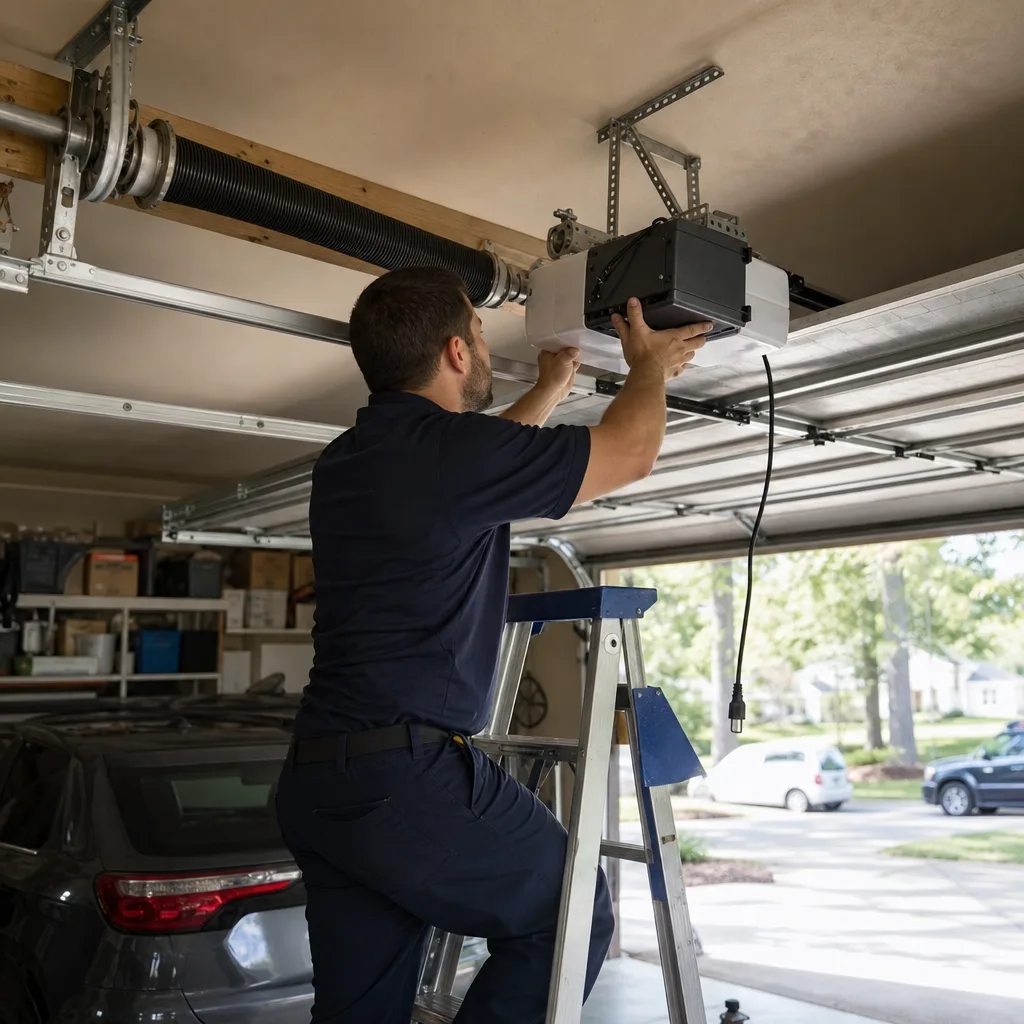
Last updated October 17, 2026
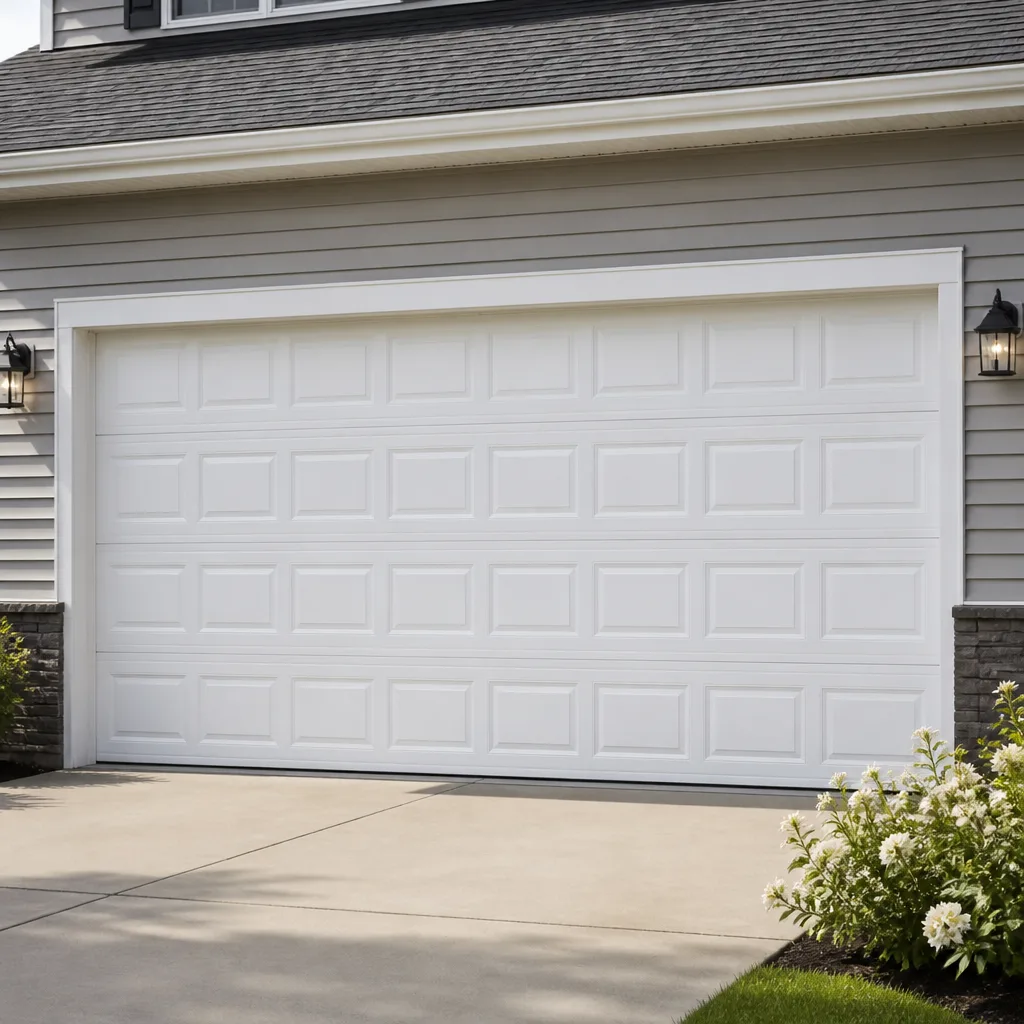 Raised-panel steel
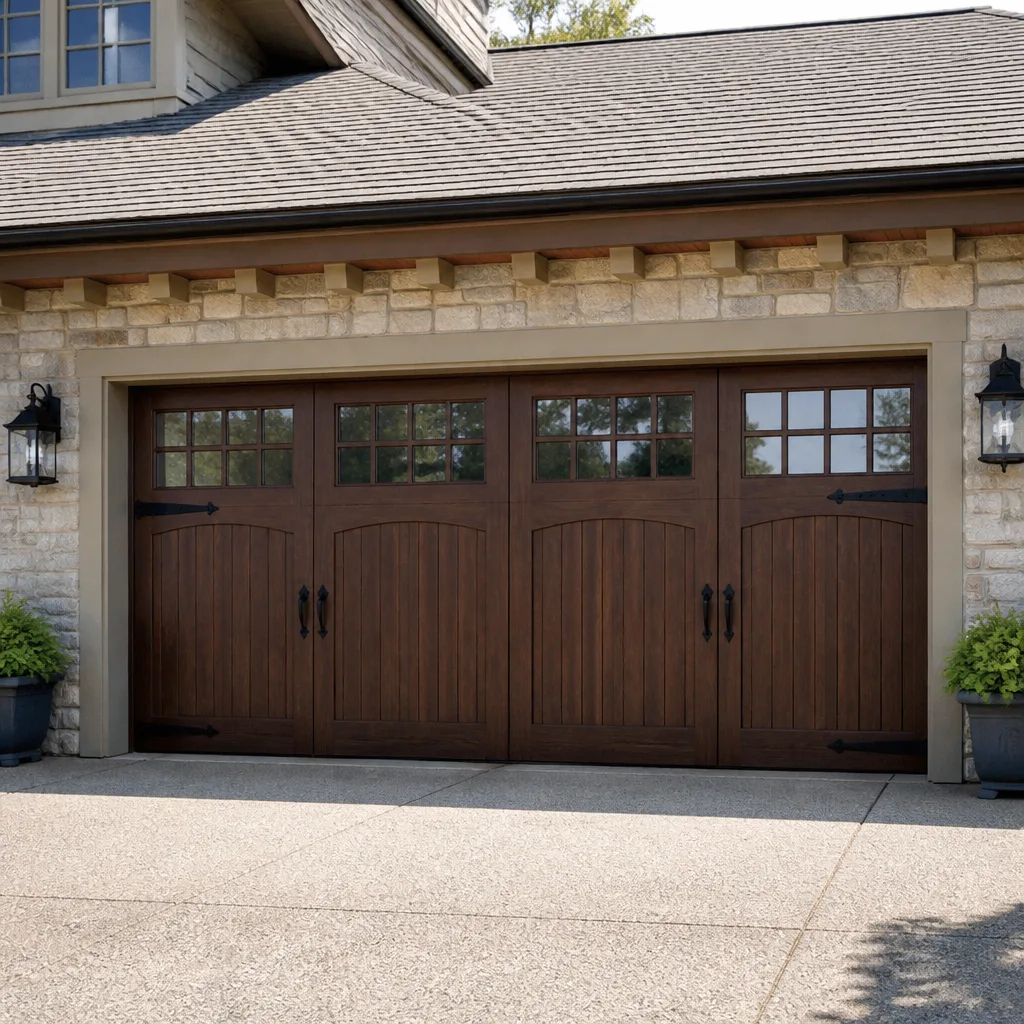 Carriage house
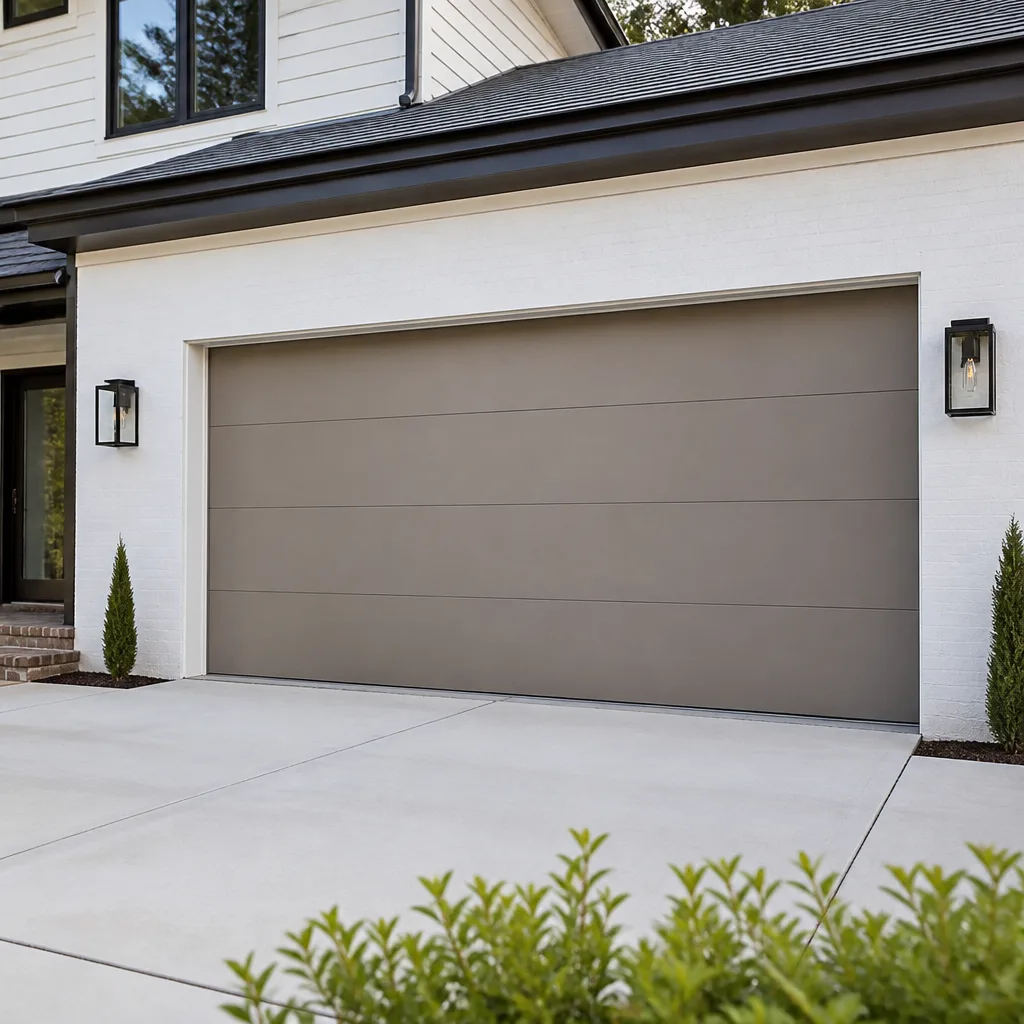 Modern flush
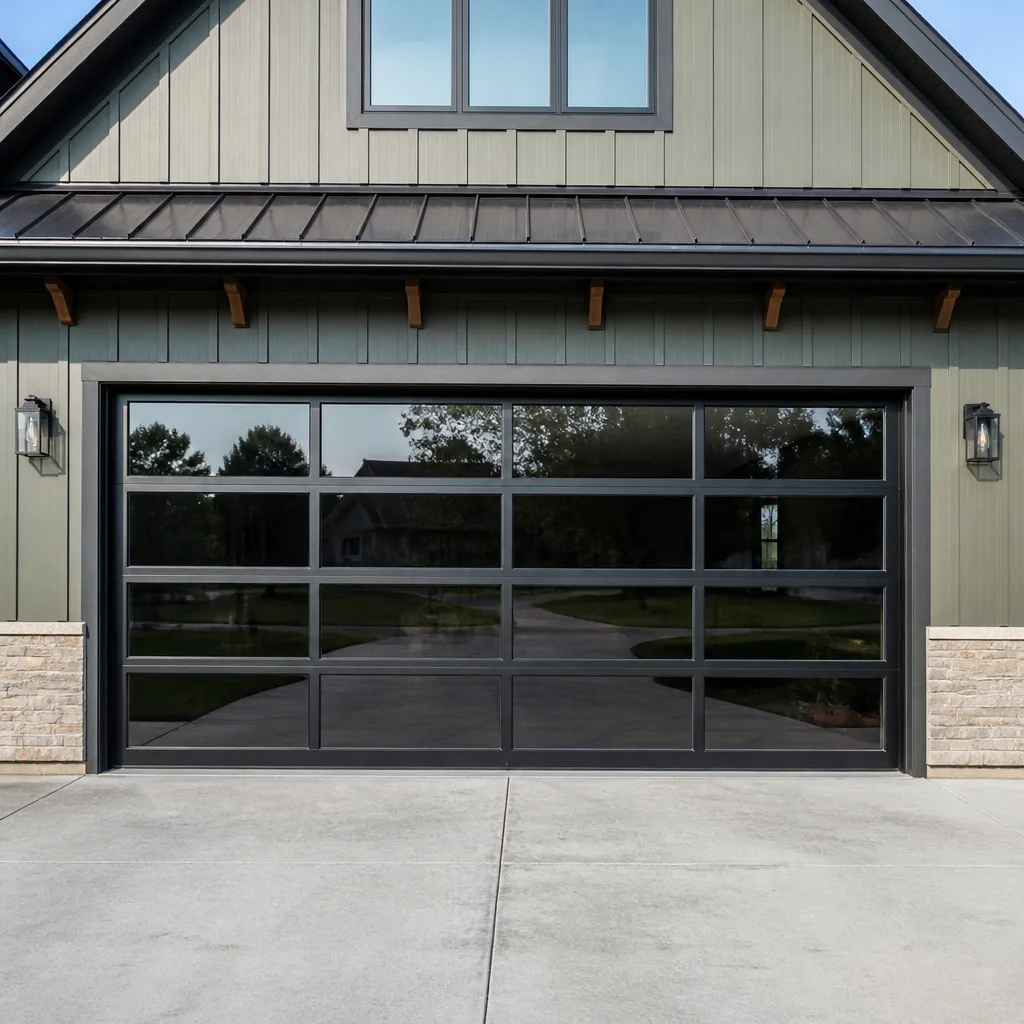 Full-view glass
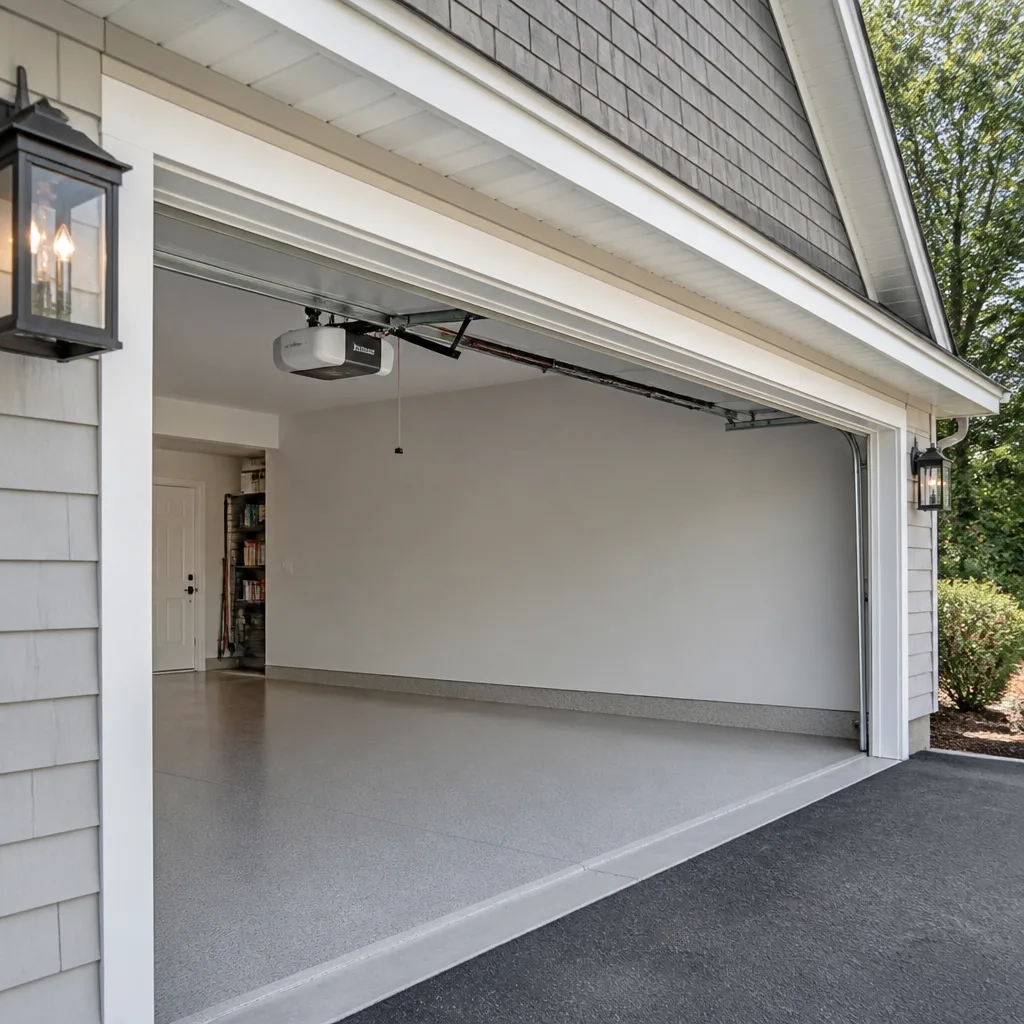 LiftMaster openers
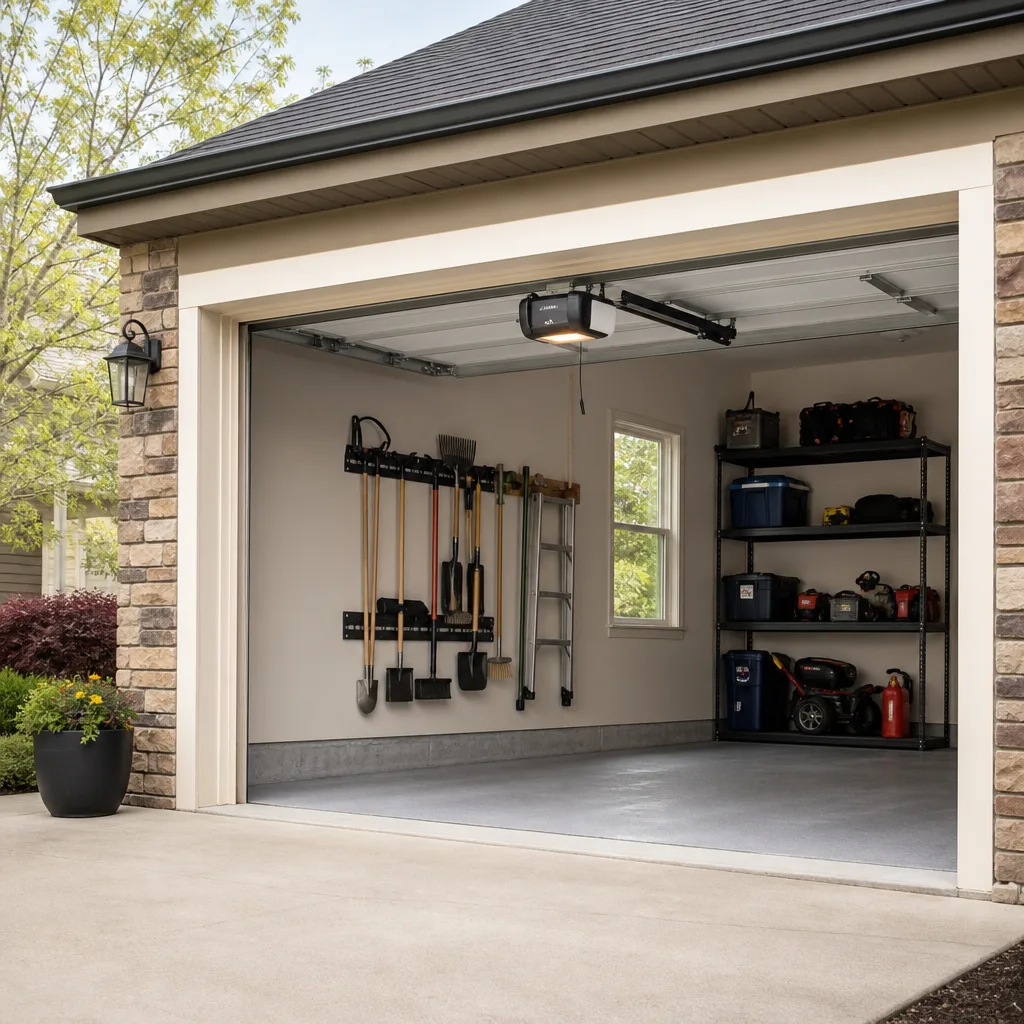 Chamberlain openers
Full 25-point door and opener safety check with every visit - springs, cables, rollers, tracks, and your LiftMaster or Chamberlain opener included
You get a price before we start. It does not change when the truck arrives.
Get your free estimateGarage Door Repair Maintenance Checklist for Sandy Springs Homeowners
Spring pollen in Sandy Springs coats roller tracks with a gritty film that accelerates wear three times faster than dry-climate recommendations account for – yet every national checklist still says “lubricate twice a year” without mentioning it. This guide is different. We built it around what actually fails here: humidity that swells wooden frames in July, temperature swings that stress torsion springs in November, and the fine yellow dust that settles into every hinge and roller track each April. For related reading, see our Garage Door Warning Signs: A Sandy Springs Homeowner’s Reference Guide. By the time you finish reading, you’ll have a month-by-month maintenance plan that keeps your door quiet, balanced, and safe – and you’ll know exactly which small fixes prevent the 6 a.m. failures that wreck a school morning.
Quick Answer
A garage door maintenance checklist for Sandy Springs homeowners should follow a seasonal rhythm: clear pollen and grit from tracks and rollers every April, check balance and spring tension monthly, inspect weatherstripping before November’s temperature drops, and lubricate moving parts with a silicone-based product that won’t attract Georgia’s heavy pollen load. The most important habit is a 5-minute monthly visual and sound check – listening for grinding or popping that signals early spring or cable wear. Most component failures give warning signs weeks before they break, and catching them early is the difference between a Garage Door Repair tune-up and a $300 emergency call.
Styles & brands we work with
Table of Contents
- The 5-Minute Monthly Garage Door Checklist
- Sandy Springs Seasonal Maintenance Calendar
- Sounds That Signal Trouble: What Your Door Is Telling You
- Lubrication in Georgia Heat: What Works and What Backfires
- Weatherstripping and Bottom Seals on Sandy Springs’ Sloped Lots
- Photo Documentation: The Habit That Protects Your Warranty
- Common Mistakes to Avoid
- When to Call a Professional
The 5-Minute Monthly Garage Door Checklist
Most homeowners in Sandy Springs use their garage door three to five times a day – more if kids are in and out with bikes and sports gear. That’s roughly 1,500 open-close cycles a year, which puts real wear on springs, rollers, and hinges. A five-minute monthly check catches most problems while they’re still cheap to fix. Here’s the exact routine we recommend, in the order that matters:
- Watch the door open and close once, from inside the garage. Look for jerky movement, hesitation, or one side lifting slightly before the other. A balanced door moves smoothly and evenly. If the door wavers or shudders, something’s off.
- Listen for new sounds. A healthy door hums quietly. Grinding suggests dry or worn rollers. Popping or creaking from the springs is an early warning. Rattling from the hinges means loose bolts.
- Check the balance. Pull the release handle (usually a red cord) while the door is closed, then lift the door manually to waist height. It should stay put without drifting up or down. A door that drops or rises on its own has a balance problem – usually spring-related.
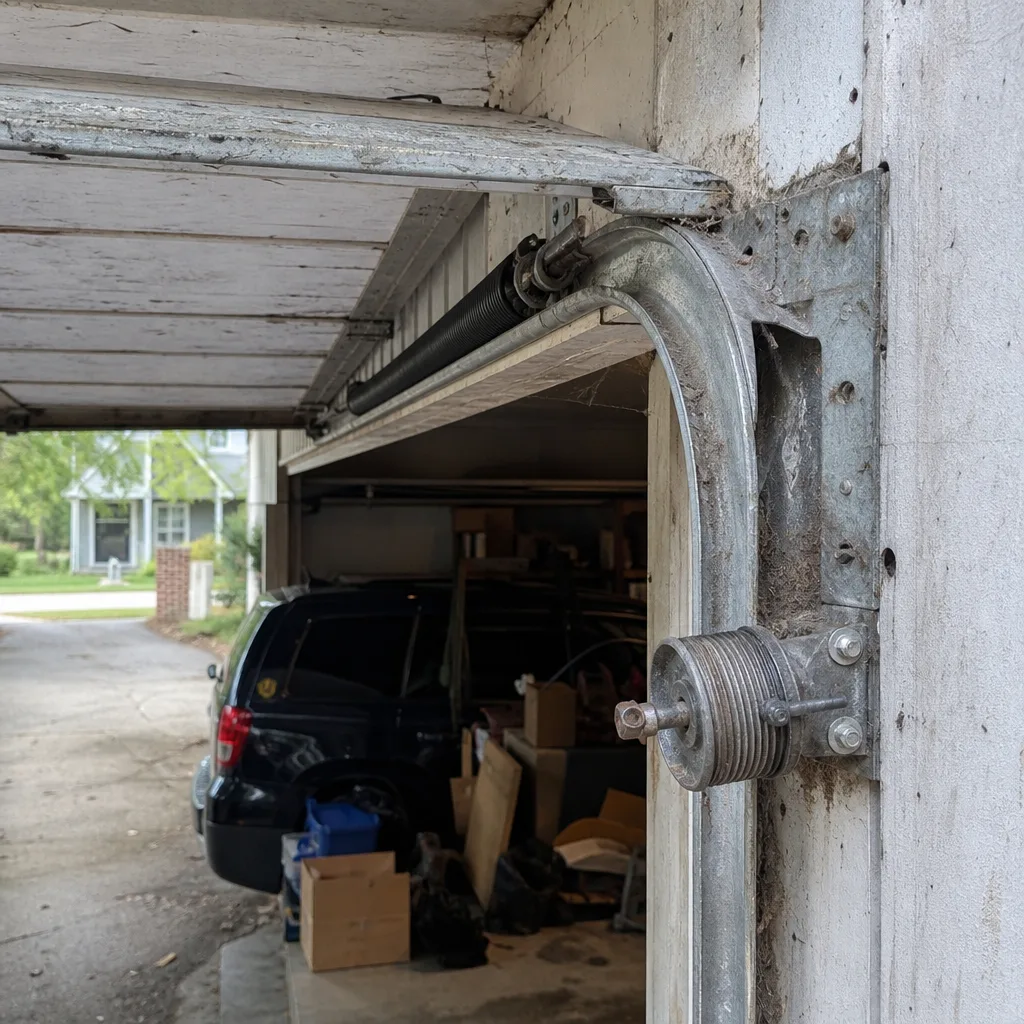
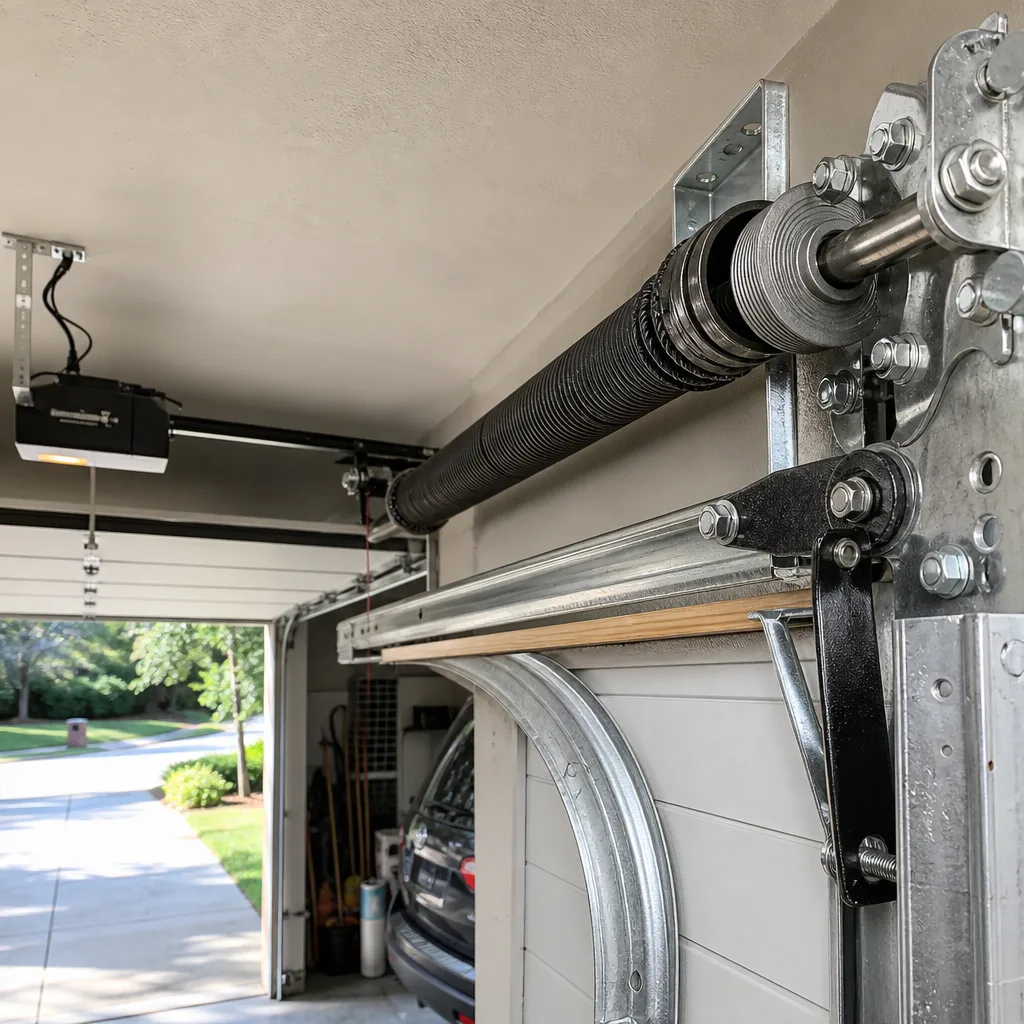
- Inspect visible cables and springs. Look for frayed cables, gaps in coil spacing, or rust. Don’t touch anything at this stage. A visual check catches wear before it fails.
- Test the auto-reverse sensors. Place a roll of paper towels in the door’s path and close it. The door should reverse immediately on contact. This is a safety feature, not a convenience – test it every time you do the monthly check.
If all five pass, your door is in good shape. If anything fails, write it down. The documentation habit matters more than most people think – more on that below.
For a deeper look at what’s involved in keeping a door running well year-round, see our guide to Garage Door Repair in Sandy Springs.
Sandy Springs Seasonal Maintenance Calendar
National checklists tell you to lubricate twice a year and check weatherstripping in the fall. They don’t account for Sandy Springs’ specific rhythm: tree pollen from late March through May, the humidity that builds from June through September, and those damp November mornings when metal contracts and old springs complain. Here’s the month-by-month plan we follow when servicing doors across Sandy Springs, from Riverside Drive up to the Chattahoochee River neighborhoods:
April – Pollen Clearing
Late March through April is Sandy Springs’ heavy pollen season, and it’s the single biggest overlooked maintenance factor in this area. Pine pollen is sticky and gritty; it settles into roller tracks, coating the metal with what is essentially fine sand. A track coated in pollen accelerates roller wear dramatically. In April, wipe down the interior tracks with a dry microfiber cloth – no lubricant, just remove the grit. If you park under oak or pine trees, do this twice during pollen season. The difference in how smoothly your door runs afterward is immediate.
May – Hinge and Roller Lubrication
After pollen season ends, lubricate all moving parts: hinges, rollers, and the torsion spring. Use a silicone-based spray, not WD-40 – more on why that matters below. This is also a good month to tighten any visible bolts on the track brackets. Loose hardware is the most common cause of noisy doors we see in Sandy Springs.
July – Humidity Check
Georgia humidity peaks in July, and it affects wooden garage doors more than steel ones. A wooden door that swells slightly in July may stick in its frame or refuse to close completely. If your door rubs against the frame, note where. A small adjustment to the track or a light sanding of the door edge can prevent a stuck door during a summer thunderstorm. Steel doors handle humidity fine, but the weatherstripping around the frame can loosen as the underlying wood swells – check for gaps.
September – Pre-Cooling Lubrication
As temperatures start to drop, give the springs a second lubrication of the year. The goal is to have everything moving smoothly before cold weather makes metal more brittle. Torsion springs under load don’t love sudden temperature changes; a lubricated spring handles the contraction better than a dry, rusted one.
November – Weatherstripping Prep
Before the first cold snap, inspect the weatherstripping around the door frame and the rubber bottom seal. Sandy Springs winters aren’t brutal, but a 40-degree morning with a draft coming under the door makes a garage noticeably colder – and drives up the heating bill for any room above the garage. Press the bottom seal against the ground along its full width. If you see daylight or feel air, it’s time to replace the seal.
December – Sensor and Safety Check
Winter brings shorter days and more activity in the garage. Test your auto-reverse sensors again. Check that the sensor lenses are clean – dust and pollen residue from the previous months can build up and cause intermittent failures. A sensor that fails intermittently is worse than one that’s clearly broken because it works sometimes, making the problem hard to diagnose.
February – Full Balance Test
Before spring and the heavy-use season, do the full balance test described in the monthly checklist. This is also a good time to look at the springs themselves. If they’re the extension type (stretching alongside the tracks), check that the safety cables inside them are intact. If they’re torsion springs (mounted above the door), look for gaps or uneven spacing in the coils.
Seasonal maintenance works because it spreads the work across the year and ties each task to what’s actually happening outside. It takes less effort than remembering one big annual “service the door” project – and catches problems earlier. If you’d rather have a professional handle the seasonal work, see Garage Door Spring Repair in Sandy Springs for what that service includes.
Sounds That Signal Trouble: What Your Door Is Telling You
Garage doors have a language, and most Sandy Springs homeowners learn to tune it out. That’s a mistake. The specific sound a door makes – and when it makes it – tells you exactly what’s wearing and how urgent the fix is. Here’s a guide to the most common sounds and what they mean:
Squeaking or squealing – usually from rollers
A high-pitched squeak that follows the door’s movement is almost always dry or worn rollers. Nylon rollers wear down over time and get loud when they’re near the end of their life. A light lubrication quiets them temporarily, but if the squeak comes back within a few weeks, the roller is likely done. Roller replacement is inexpensive and fast, but a roller that seizes can cause the door to hang up or derail. In Sandy Springs’ pollen season, even good rollers get noisy from the grit – clean the track first, lubricate second, and listen again.
Popping or creaking from above the door – springs
Torsion springs make a specific sound when they’re wearing: a creak or pop at a particular point in the door’s travel. It’s the sound of individual coils shifting or releasing tension. If you hear this consistently at the same spot every time the door opens, that’s a spring on its way out. Springs have a lifespan measured in cycles – most residential springs last 10,000 to 15,000 cycles, which for the average Sandy Springs household works out to 7 to 10 years. A popping spring isn’t an emergency today, but it’s signaling that replacement is coming. Catching it before it breaks saves a service call at an inconvenient hour.
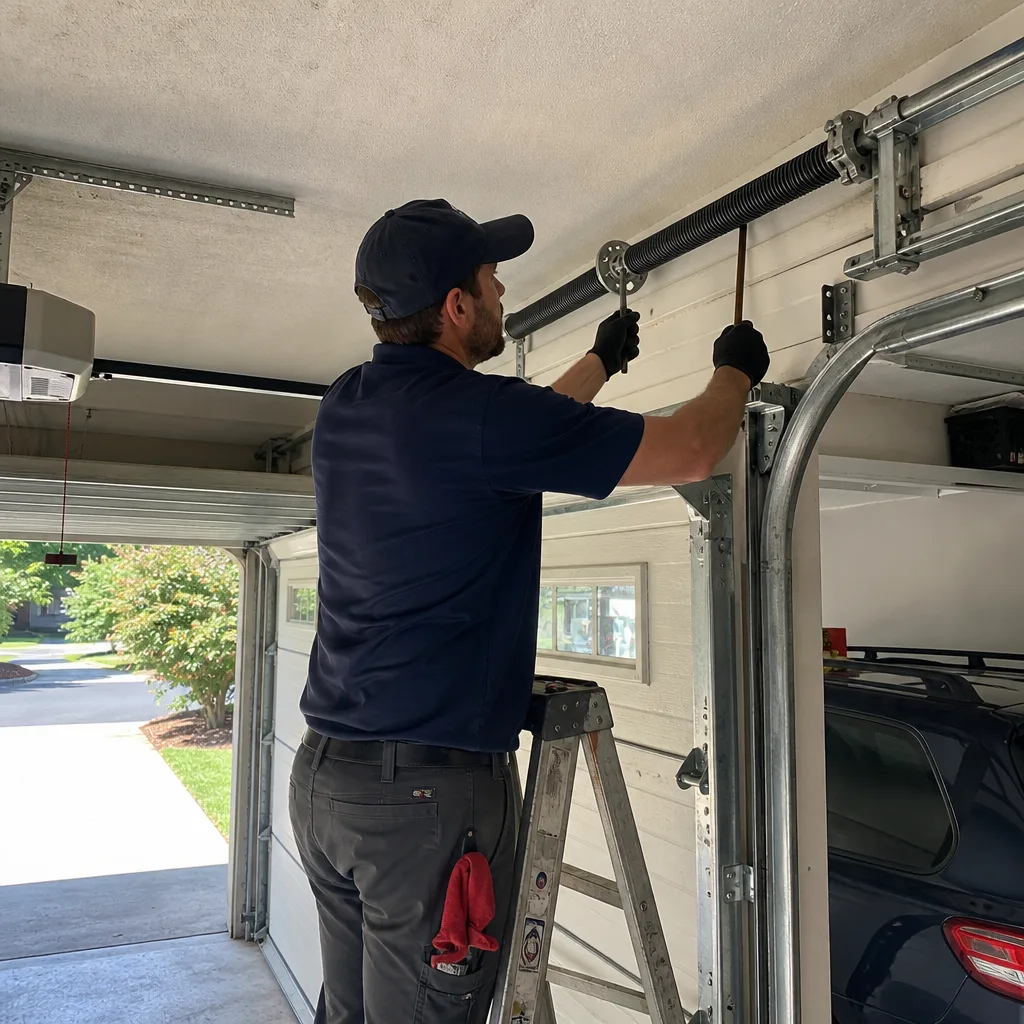
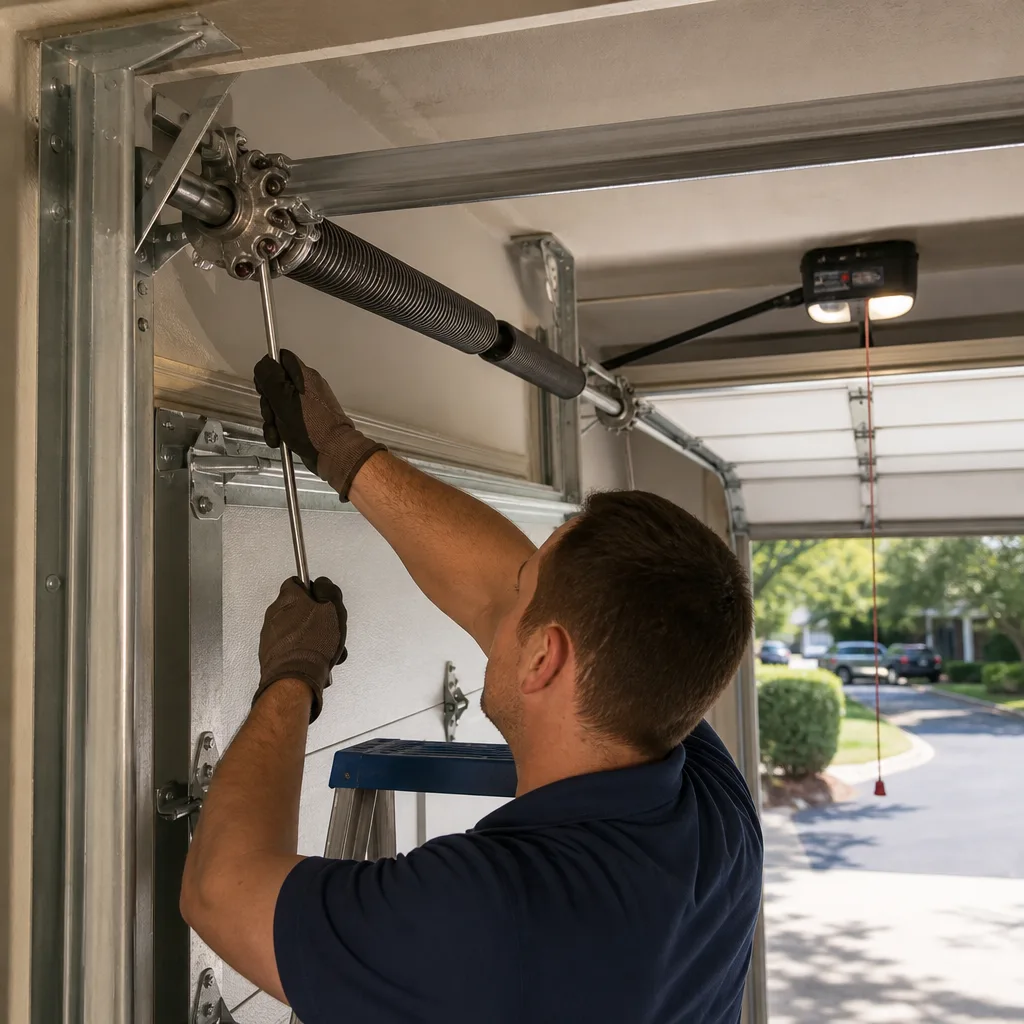
A note on safety: torsion springs are under extreme tension – enough to cause serious injury if they fail while someone is working near them. Never attempt to replace or adjust a spring yourself. This is the one repair on a garage door where even experienced homeowners should always call a trained technician. The springs and cables are the loaded parts of the system; everything else is accessible.
Grinding or vibration – opener or chain
Grinding is metal-on-metal contact. If the sound comes from the opener unit at the ceiling, it’s likely the drive gear wearing. If it comes from a chain-drive opener, the chain may have loosened. A grinding sound that started recently is worth addressing fast – openers that grind usually get worse with each use, and they can damage the gear assembly beyond repair if left alone.
Heavy clunking at the start or stop – spring tension
A healthy door changes direction smoothly. A door that “clunks” when it starts moving or slams the last few inches is dealing with improper spring tension or a failing spring. The clunk is the sound of the opener struggling against a door that’s no longer balanced. If you notice this, try the balance test from the monthly checklist. If the door doesn’t hold at waist height, have the springs inspected.
Rattling throughout the track – loose hardware
Rattling comes from loose bolts or brackets. The fix is usually a socket wrench and ten minutes. But if bolts are loose repeatedly in the same spot – especially where the track brackets meet the wall – the underlying hardware is wearing, and tightening alone won’t hold. Loose track bolts can cause the door to bind or come off the track entirely.
If you’re hearing any of these sounds and aren’t sure what they mean, call us. We’d rather spend five minutes on the phone helping you identify the sound than have you wait until the door stops moving. A live person answers at (912) 348-5341, every time.
Lubrication in Georgia Heat: What Works and What Backfires
Lubrication advice is where most national checklists fail Sandy Springs homeowners. The most common recommendation – WD-40 or a generic penetrating oil – is the worst choice for this climate. Here’s the problem: penetrating oils are solvents that break down existing lubricant and then evaporate, leaving the metal drier than before. In Georgia’s heat, they also stay wet and sticky after application, which means they attract pollen dust. Within a week of applying WD-40 during April, you’ve created a gritty paste on your rollers that accelerates wear.
The right lubricant for Sandy Springs conditions is a silicone-based spray or a white lithium grease, applied sparingly. Silicone dries to a thin film that lubricates without staying wet, so it doesn’t hold pollen. White lithium works well on hinges and springs but should be wiped after application to remove excess. The key is using less than you think – a light coat lubricates; a heavy coat collects grit.
What to lubricate in order:
- Rollers: only if they’re metal. Nylon rollers have sealed bearings and don’t need lubrication – adding spray just makes them sticky. If you have nylon rollers and they squeak, the bearing is worn and the roller needs replacing.
- Hinges: a small spray at each pivot point, wiping away excess. Hinges take a lot of movement and benefit most from regular attention.
- Torsion springs: a light coat along the full length of the spring. This reduces friction between coils as the spring winds and unwinds, which extends spring life and reduces the popping sound described above.
- Chain on chain-drive openers: a light machine oil works better than spray here. Don’t over-oil – dripping oil catches dust and creates a mess on the garage floor.
What not to lubricate: the track itself. A common mistake is spraying the vertical tracks, which then collect dirt and cause the rollers to slip. Tracks should be clean and dry. If the door binds in the track, the problem is alignment or a worn roller, not lack of lubrication.
For most Sandy Springs homes, the lubrication schedule that works is: April cleaning, May lubrication, September lubrication, and a quick check any time the door sounds dry. That’s five minutes of work twice a year, plus the pollen cleanup. If you’re not sure which parts of your door are metal versus nylon, snap a photo and call – we’ll tell you what you’re looking at over the phone.
Weatherstripping and Bottom Seals on Sandy Springs’ Sloped Lots
Sandy Springs has more sloped driveways than flat ones, especially in neighborhoods like Dunwoody Chase, Riverside, and the streets climbing up from Abernathy Road toward Dalrymple. That slope affects garage door bottom seals in a specific way: the door doesn’t always meet the ground at the same angle on both sides. A seal that compresses correctly on the left side may leave a visible gap on the right side if the concrete has a slight crown or pitch.
The bottom seal – that rubber strip along the bottom edge of the door – is the first line of defense against water, insects, and Georgia’s humidity. It’s also the most neglected part of most garage doors because homeowners rarely look at it from the outside while the door is closed.
How to check bottom seal compression:
- Close the garage door fully and step outside.
- Crouch down and look along the bottom edge where the door meets the concrete.
- Check for gaps: any visible daylight, a stream of air, or water stains on the inside floor after rain indicates a failing seal.
- Press a piece of paper against the seal at several points along the width. If the paper slips freely under any point, the seal isn’t compressing there.
- Check the condition of the rubber itself: cracks, brittleness, or flattening mean the seal has hardened and won’t recover. Bottom seals last 3 to 5 years in Sandy Springs’ conditions – less if the door faces south and gets afternoon sun.
Replacing a bottom seal is a straightforward job that costs significantly less than repairing water damage to stored items or replacing a warped wooden door frame. If your sloped driveway makes the seal wear unevenly, a technician can make a small adjustment to the door’s travel limit so it closes evenly into the seal. It’s one of those fixes that takes minutes but makes a real difference in keeping the garage dry and clean.
Photo Documentation: The Habit That Protects Your Warranty
Here’s the maintenance habit almost no one talks about, and it’s the one that most often saves Sandy Springs homeowners money: take photos of your garage door system every three months. Four photos, thirty seconds, from the same four angles each time: the springs from below, the left track and cables, the right track and cables, and the bottom seal from outside with the door closed.
Why this matters: garage door warranties – both manufacturer and installer warranties – almost always contain language about regular maintenance. If a spring fails and you file a claim showing you documented its condition every quarter, you have a record of wear progression that no insurance adjuster can argue with. Without photos, it’s your word against boilerplate exclusion language. We’ve seen this work in real claims, and we’ve seen the opposite – denied claims where the homeowner simply couldn’t show the part had been maintained.
Photo documentation also helps you notice changes over time. A photo of a spring from January compared with the same shot in September makes visible what the eye glosses over day to day: rust, loosening coils, fraying cables. If you’re not sure whether something has changed, comparing photos side by side will usually answer it.
Store the photos in a folder on your phone labeled “Garage Door – Year” and replace them each quarter. It’s the cheapest insurance you’ll ever have.
If a photo shows something you’re unsure about, send it through. We’re glad to take a look and tell you whether it’s normal wear or something to address. You can reach us at Fernbrook Garage Doors Sandy Springs home or call (912) 348-5341.
Common Mistakes to Avoid
- Using WD-40 or penetrating oil on moving parts. In Sandy Springs’ pollen-heavy springs, these oils stay wet and gummy, collecting grit and turning into an abrasive paste. Use a silicone-based lubricant that dries to a thin film.
- Lubricating nylon rollers. Most modern doors – including many Amarr and Wayne Dalton models installed in Sandy Springs – use nylon rollers with sealed bearings. Adding lubricant makes them sticky and doesn’t fix a worn bearing. Replace the roller instead.
- Comparing your door’s needs to a dry-climate checklist. A garage door in Phoenix has different maintenance needs than one in Sandy Springs. Recommendations written for national audiences don’t account for our humidity, pollen, or temperature swings.
- Ignoring new sounds for a few weeks to “see if it goes away.” Garage door sounds don’t go away. They get louder and more expensive. A squeak that costs $40 to fix this month becomes a $200 repair if the roller fails completely.
- Testing the auto-reverse sensors only when they fail. The sensors are a safety system that protects children and pets. Testing them monthly is part of the routine, not a chore to skip when the door seems to work.
- Doing spring or cable work yourself. No matter how many YouTube tutorials you watch, torsion springs and cables are loaded with enough force to seriously injure or kill. This is the line between maintenance and repair. Stay on the maintenance side of it.
- Skipping the written record. If you don’t document your maintenance – dates, what you did, photos – you lose the warranty protection and the ability to see slow changes over time. Maintenance without a record is just a feeling.
When to Call a Professional
Most of the maintenance in this guide is designed for a homeowner with basic tools and ten minutes a month. But there’s a clear line where DIY stops and a trained technician starts. If you’re unsure how to choose one, read our How to Hire a Garage Door Contractor in Sandy Springs: A Step-by-Step Guide. Call a professional if you see a frayed cable, a gap in spring coils, a door that won’t hold position in the balance test, or a door that has come off its track. Call if the opener is grinding and lubricating the chain doesn’t help. Call if you’ve replaced the bottom seal and the door still doesn’t close evenly. And call immediately if a spring breaks – a broken spring means the door will not operate until it’s replaced, and no amount of maintenance fixes that.
Fernbrook Garage Doors Sandy Springs offers free estimates in Sandy Springs – call (912) 348-5341 and a live person will answer, day or night.
See the difference
 Before
 After
After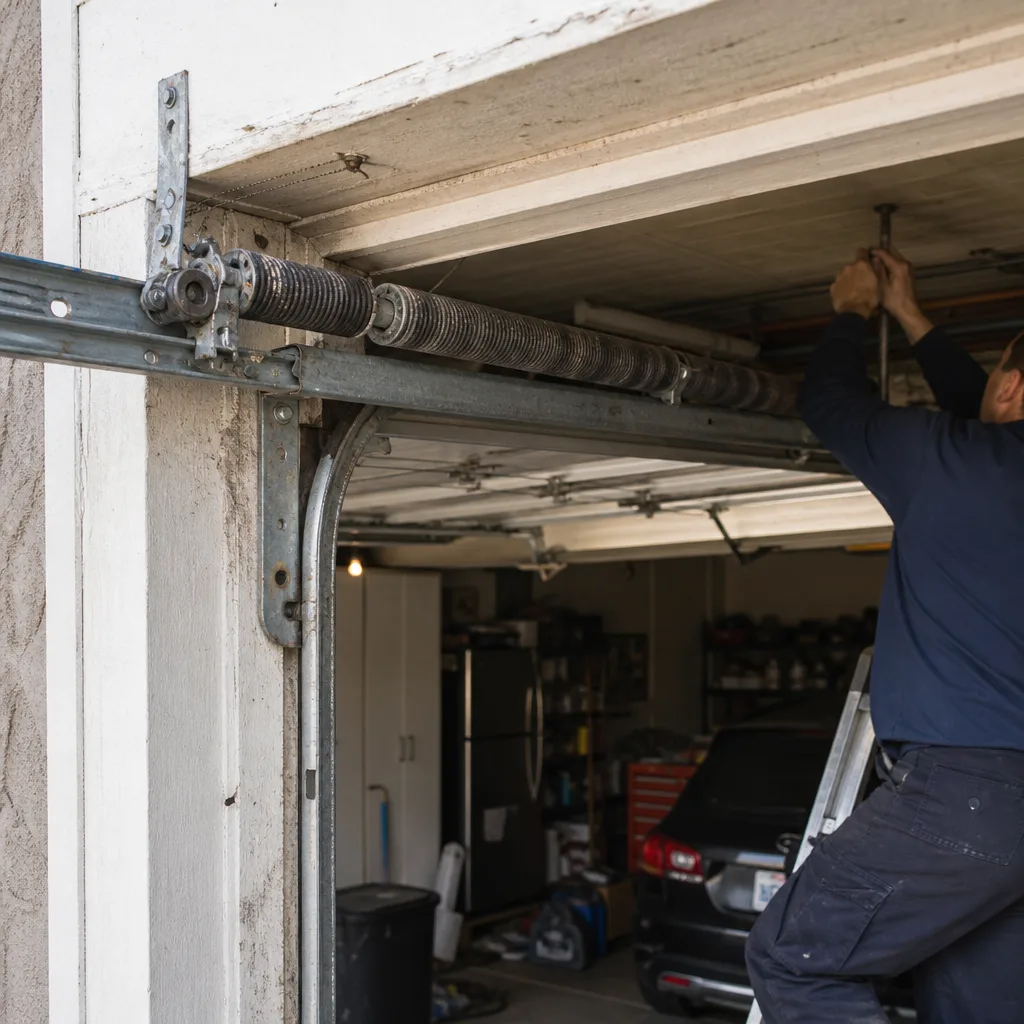 Before
 After
After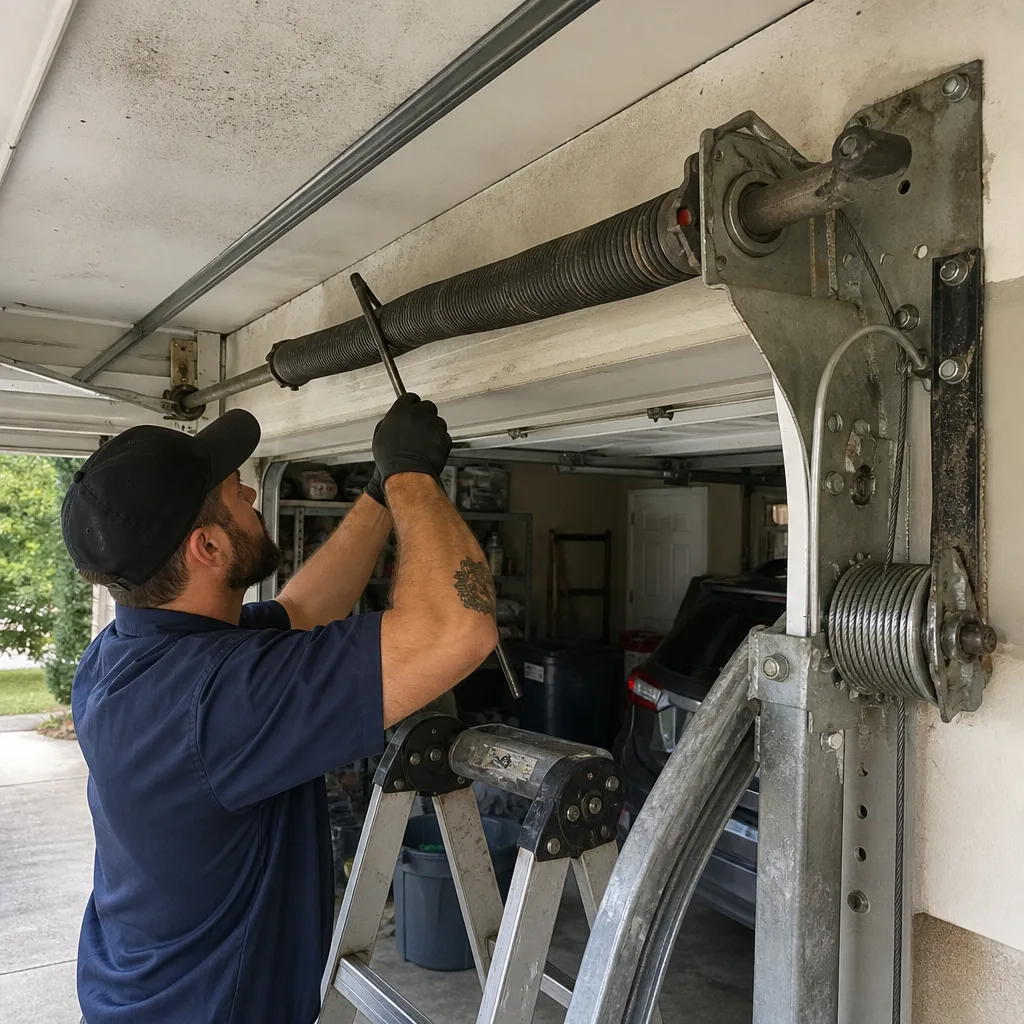 Before
 After
AfterFrequently Asked Questions
Twice a year – once in May after pollen season and once in September before temperatures drop – with a silicone-based lubricant. If your door faces a tree-lined street or you park under pines, you may also need a dry track-cleaning in April and a quick lubrication touch-up after it. Listen to the door: if it sounds dry or the movement feels rough, lubricate sooner rather than waiting for the calendar.
A popping sound at a specific point in the door’s travel usually comes from the torsion spring, and you’ll notice it more on cold mornings when metal contracts. It’s the sound of coils shifting as the spring winds and unwinds. A light silicone coating on the spring often quiets it immediately. If the popping continues after lubrication, have the spring inspected – it’s signaling wear, and replacement is cheaper when planned than when a spring fails without warning.
You don’t have to know – treat all garage door springs as dangerous by default. Extension springs have safety cables running through them that can be visually checked for integrity. Torsion springs should never be adjusted, unwound, or replaced by anyone without proper training. If you see a gap in the coils, rust, or a spring that looks unevenly spaced, call a professional. It’s the one component where the cost of being wrong is too high to risk.
Nylon rollers hold up better in Sandy Springs because they’re quieter, they don’t rust in high humidity, and their sealed bearings resist the grit that pollen season brings. Steel rollers are cheaper but noisier and more affected by moisture. Most doors we install – including models from Craftsman and Raynor – ship with nylon rollers for these reasons. If your door has steel rollers and you’re tired of the noise, switching to nylon is a straightforward upgrade.
First, check that the opener is getting power and that the manual release cord hasn’t been pulled – both are common after storms. If the door is stuck partway and won’t move manually either, there may be a broken spring or a derailed roller. Don’t force the door; forcing a door with a broken spring can damage the opener or the track. Call a technician. A storm that knocks out power doesn’t usually damage the door itself, but water intrusion or a fallen branch can create real problems that need a professional look.
A professional maintenance visit in Sandy Springs typically runs $90 to $160 and includes lubrication, hardware tightening, balance adjustment, and a full safety check. Individual parts are extra: bottom seals run $20 to $40 for the part, rollers $10 to $20 each installed, and torsion spring replacement $180 to $340 depending on the spring rating. The maintenance visit itself often pays for itself by catching a $40 problem before it becomes a $300 emergency. Call (912) 348-5341 for an exact quote – estimates are free, and the price is written down before any work begins.
The Bottom Line
A garage door maintained with Sandy Springs’ climate in mind is quieter, safer, and dramatically less likely to fail without warning. The core habits are simple: a 5-minute monthly check, seasonal lubrication with the right product, pollen cleanup in April, weatherstripping before November, and quarterly photo documentation. If you do those things, you’ll catch most problems early. If you hear something new or see something that doesn’t look right, don’t guess – call a professional who knows these doors and this climate, or browse our more guides & resources for additional help. The best maintenance is the kind that means you never have to think about your garage door at 6 a.m. on a school morning.
If you’re ready for a professional tune-up, or you just want a second opinion on what you’re seeing with your door, our team at Garage Door Installation in Sandy Springs would be glad to help. Call (912) 348-5341 for a free estimate – a live person answers, and you’ll get a written price before any work starts. Shoe covers on hardwood, drop cloths on tile, and a photo of the clean-up before we leave, every time.
Written by Jesse Calder, Owner at Fernbrook Garage Doors Sandy Springs, serving Sandy Springs since 2002.